
Boston's Rental Market Is Sending a Signal. Are You Listening?
Learn how the rental Real Time Availability Rate impacts your leasing strategy.
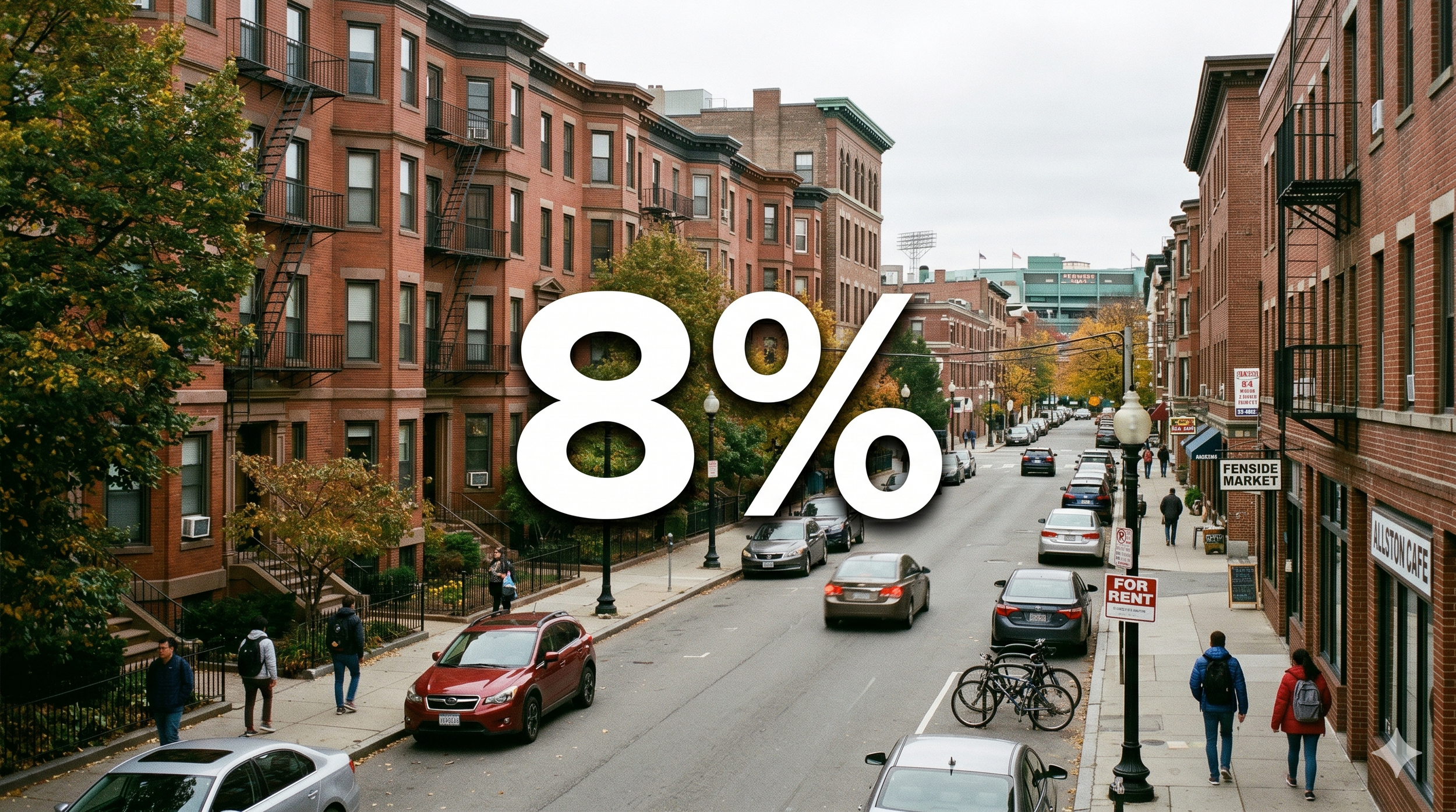
There's a number every Boston landlord should know right now: 8%.
That's where Boston's Real Time Availability Rate, or RTAR, sat as of late April 2026. And while 8% might not sound alarming on its own, context is everything. According to Boston Pads, which tracks live apartment market data across Boston neighborhoods, that figure has been climbing steadily since January, during a season when it historically does the opposite. Spring is supposed to be when rental inventory tightens. Renters lock in apartments for September. Availability drops. Landlords hold the cards. That's the normal script. This spring, someone rewrote it.
What the Data Is Actually Telling Us
For the past seven years, with one obvious exception for the pandemic, Boston's RTAR has leveled off and started declining by late March or April. Instead, in 2026, availability has been climbing week after week. As of late April, the market is at levels more consistent with mid-summer shoulder season than peak spring leasing. That divergence from historical norms is the headline. Not the number itself.
Boston Pads flagged several forces that may be driving the shift, and they deserve a closer read if you own property in this city.
The labor market. Massachusetts unemployment climbed to 4.8% in February, while payroll jobs declined by 7,200 in a single month. Boston-area unemployment hit 4.9% in January. Employers nationally have shifted to a "low-hire, low-fire" posture, which means fewer relocating workers, fewer new renters entering the market, and fewer people upgrading to better apartments. All of that shows up eventually as vacancy.
Federal funding cuts are a real and growing headwind. The state budget has absorbed billions in cuts tied to reduced federal support. Research grants to Massachusetts universities, particularly through NIH and the National Science Foundation, have been significantly curtailed. The Longwood Medical corridor, one of the most powerful economic engines in Boston's rental ecosystem, is not immune to this. Fewer research dollars means fewer researchers, fewer grad students, and fewer people competing for apartments in Fenway, Mission Hill, and the South End.
Student enrollment is shifting. Boston's 2025 Student Housing Report showed total college enrollment declined in 2024, the first annual drop since the pandemic. Undergraduate enrollment fell by over 1,600 students. That might sound small, but undergraduates are the heartbeat of Boston's off-campus rental market. They move frequently, fill shared apartments, and keep turnover healthy. A softening in that population shows up fast in neighborhoods like Allston, Fenway, and Fort Hill.
Those neighborhoods, by the way, are already leading the city in year-over-year RTAR growth.
The Next Eight Weeks Matter More Than Usual
Boston Pads put it plainly: the next four to eight weeks will determine whether this is a temporary spike or the beginning of a larger market reset. If availability climbs past 9%, we're in unusual territory for peak leasing season. If it crosses 10%, the conversation shifts from "watch carefully" to "act quickly." That's not meant to create panic. It's meant to create clarity. Markets are always sending signals. The landlords who do well over time aren't necessarily the ones who called every market perfectly. They're the ones who didn't ignore the signals when they arrived.
What This Means If You Own a Rental Property in Boston
Let's get practical. If your unit is currently vacant or rolling over in the next 60 days, pricing it at last September's rate without checking current comps is a mistake. The market has shifted. Not dramatically, not catastrophically, but it has shifted. Renters have more options right now. They know it. Your marketing needs to reflect that reality.
Leasing velocity matters more than rent price in a rising-inventory environment. A unit sitting vacant for six weeks at a rental rate that's $75 too high costs more than the savings you were protecting. We've seen this play out in previous soft markets. Owners hold the line on price, vacancy stretches into fall, and suddenly September 2nd arrives with an empty apartment. That's a financial and emotional gut punch that compounds.
If you have good tenants in place, this is also a useful reminder of what they're worth. A reliable tenant who pays on time and treats the unit well is genuinely hard to replace in any market. When the market softens, it gets harder. Retention is a strategy, not just an outcome.
Finally, if your unit needs work, this is actually useful information for prioritizing. The tenants who have more choices are the ones who will walk past the unit with the dated kitchen and the buzzer that doesn't work. First impressions in a competitive market close leases. Deferred maintenance is a leasing liability.
This Is a Market That Rewards Preparation
There's a version of property ownership where you're always one step behind the market. You find out rents softened when your unit goes vacant. You respond to the market instead of anticipating it. There's another version where you're paying attention. Where the signals arrive early, you adjust accordingly, and your property performs steadily because of thoughtful, proactive management.
The data is available. Boston Pads publishes RTAR trends publicly and tracks them at the neighborhood level. We follow it closely, and we think every Boston landlord should too. Markets don't announce turning points. They reveal them slowly, and then suddenly. The spring of 2026 may be one of those moments worth taking seriously.
If you want to talk through what this means for your specific property, we're here for that conversation. That's exactly the kind of thing we love to dig into together.